
Wet windows by breakfast, radiators doing their best, and that creeping worry about mould? When the cold hits, moisture wins, and you’re left wiping glass with a tea towel like a ship’s deckhand. Here’s the good news: a quiet little bowl can change the game overnight.
The air had that crisp, hotel-lobby cleanness, not the woolly fug you get after a steamy shower and a late load of laundry. *It felt a bit like cheating.*
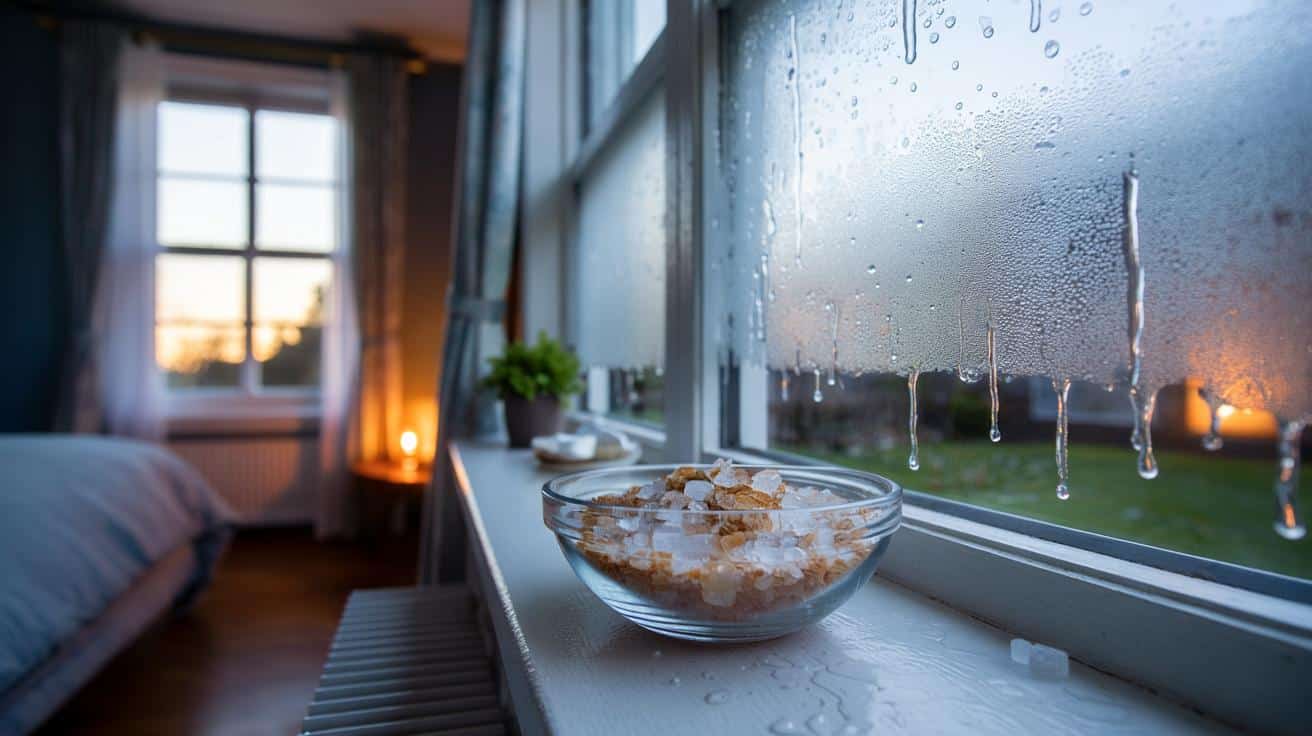
I’d put a bowl on the sill before bed, filled with what looked like gravel but was actually moisture-hungry crystals from a pet aisle. By sunrise, the windows weren’t crying; they were clear, like someone had polished them while I slept. **No gadgets. No whirring fans.**
One small change. One quiet win.
Why your windows “cry” at night
By evening, every home is a little weather system: kettles hiss, showers steam, clothes dry over radiators, and humans breathe warm vapour into the air. That warm air can hold a lot of moisture, right up until night cools the room and the glass turns into the coldest surface in sight. The moment the air touching that pane is cooled below its dew point, water falls out and you wake to glossy, dripping glass.
We’ve all had that moment when you swipe a sleeve across the window and it comes away sodden, because an average family can pump out 8–12 litres of moisture in a day from cooking, bathing, and just being alive. A reader in Manchester told me she was running a dehumidifier two rooms away and still finding puddles on the sill every dawn; the bathroom wasn’t even used after 9 p.m. The problem wasn’t “too much house,” it was microclimate: warm, wet air meeting cold glass.
That’s where the bowl comes in, working like a tiny, silent sponge for the air. Rock salt, silica-based cat litter, or bicarbonate of soda are desiccants, which means they pull water vapour from the air through a simple attraction to moisture. As they dry the thin layer of air by the window, the dew point around the glass nudges upward, so less vapour turns into liquid on the pane. **It works because physics, not magic.**
The bowl trick that beats condensation
Grab a wide, shallow ceramic or glass bowl and fill it with 300–500g of a desiccant: coarse rock salt, silica gel cat litter, or a mix of rice and bicarbonate of soda. Set it on the window sill, close to the coldest section of glass, or tuck it on a bedside table under a single-glazed frame. If it’s safe and quiet, crack the window a whisker for airflow; the bowl still works without it, but a tiny leak of fresh air helps the microclimate.
Swap or stir the contents every few days, and replace when clumped or wet to the touch; you’ll see the salt crust, or the litter turn from crisp to gummy. Keep bowls away from pets and small hands, and avoid metal containers that can corrode if brine forms at the bottom. Let’s be honest: nobody really does that every day, so place two bowls in rotation and deal with them on laundry day — tidy, predictable, and easy.
If you want a more aggressive set-up, try two bowls per problem window — one on the sill, one on a shelf — and pair it with a morning wipe-down.
“You don’t need to dry the entire room; you only need to change the air right next to the glass,” says London window fitter Jamie Price. “Think of it like drying a lens — smaller area, faster win.”
- Fillers that work: rock salt, silica cat litter, bicarbonate of soda (or a 50:50 bicarb–rice mix)
- Starter amounts: 300–500g per window, more for bay windows or damp box rooms
- Costs: from £1–£4 per bowl fill; many refills last a week or two
- Containers: wide ceramic bowls, ramekins, or a loaf tin lined with baking paper
- When to refresh: once clumped or visibly wet; dry the container between refills
What this changes — and what it invites
There’s a quiet power in small rituals that make a home breathe better, and this one earns its keep quickly. A bowl isn’t a full fix for deep damp in walls or a loft that needs insulation, yet most people aren’t trying to rebuild — they just want the bedroom window not to glisten like a greenhouse at dawn. **Start tonight, and your morning view could be clear.**
Friends start to notice when mould stops blooming behind the curtains and the paint no longer feels sticky along the frame. A cousin in Bristol combined two bowls with a three-minute “shower purge” — fan on, door closed, window cracked — and the black spots retreated in a fortnight. It’s not flashy, it’s not costly, and it gives your radiator heat a chance to feel like comfort instead of fog.
Share the trick with your street WhatsApp or the parents at the school gate, because someone’s still wiping glass and thinking that’s just how winters are. Swapping hacks like this is the neighbourly energy that makes entire terraces feel drier, one bowl at a time. Tell me if you discover a new filler that sings — there’s room for your version of the story.
| Point clé | Détail | Intérêt pour le lecteur |
|---|---|---|
| Bowl filler | Rock salt, silica cat litter, or bicarbonate of soda | Choose a cheap, available desiccant that actually absorbs vapour |
| Placement | On the sill under the coldest glass; add a second bowl for bay windows | Targets the microclimate that causes overnight drips |
| Refresh rate | Stir every few days; replace when clumped or wet | Keeps the bowl effective without daily faff |
FAQ :
- Does a bowl of salt really stop condensation overnight?In many bedrooms and small lounges, yes — it often cuts or stops the morning drip by drying the air next to the glass; try one night and compare.
- What’s best: salt, bicarb, rice, or cat litter?Silica gel cat litter and rock salt absorb the most; bicarb helps and neutralises odours; rice is the weakest on its own unless mixed with bicarb.
- Where should I place the bowl?As close to the cold pane as practical, on the sill or a nearby shelf; avoid blocking curtains tight against it so air can circulate.
- Is it safe around kids and pets?Keep bowls out of reach and label them; silica and salt aren’t for nibbling, and clumped brine can spill if tipped.
- How often do I replace the contents?When they clump or go damp to the touch; in a busy winter room that’s roughly weekly, faster in very humid homes.






Tried the rock salt last night — zero drips this morning. Bedroom actually smelled fresher too. Saved me from running the noisy dehumidifier at 2 a.m. Cheers for the simple, cheap hack!