
Gardeners across the UK are quietly reaching for something from the kitchen drawer — not fertiliser, not a gadget — to help their greenery limp through to spring. It costs about 3p per plant. It takes two minutes. And it works because winter isn’t just about temperature. It’s about light, draft, and lost moisture.
I saw it on a Tuesday, late afternoon, the sort of grey that flattens a room. A neighbour slid a piece of kitchen foil behind her windowsill herbs, smoothed a second strip around the pot like a tiny jacket, then tucked a scrap under the saucer. The window threw back a clean silver glow. Rosemary that had been sulking all week suddenly looked… awake.
It felt like cheating, in the best possible way. The whole thing cost less than a bus fare. The room brightened.
The 3p trick everyone’s pinching from the kitchen drawer
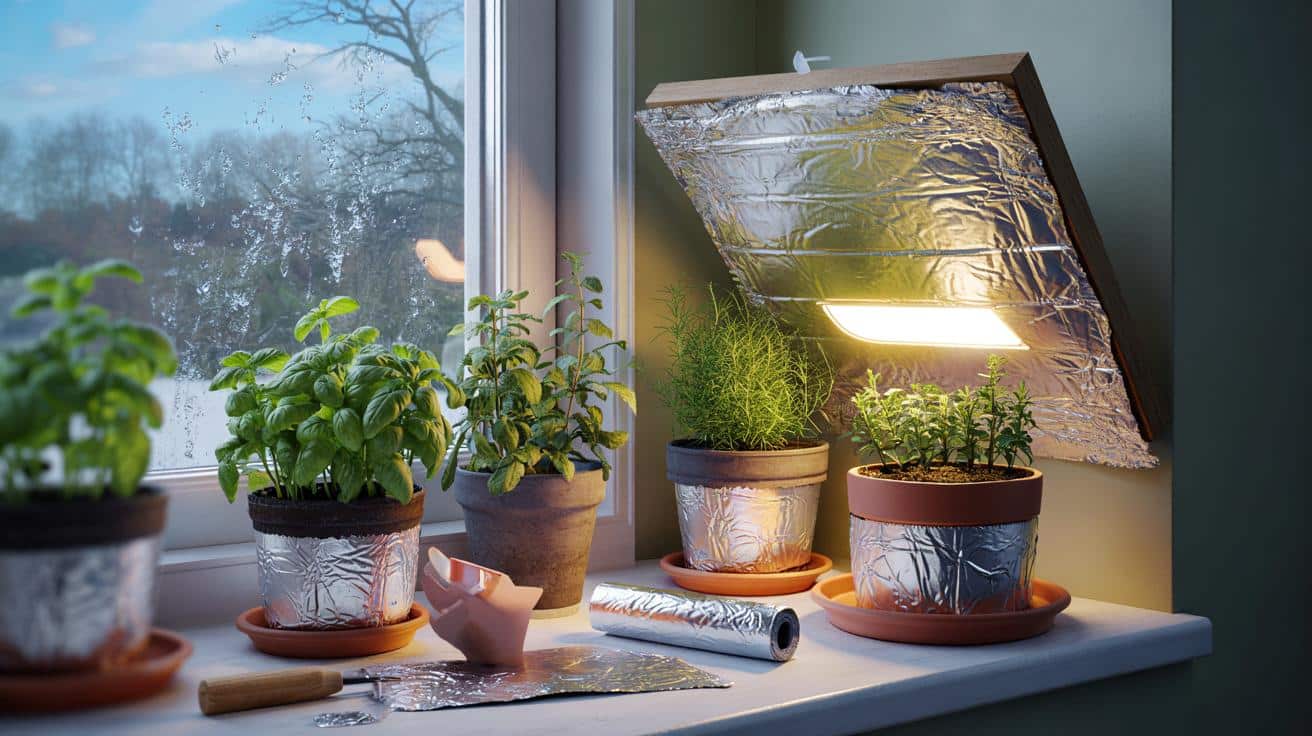
Here’s the simple move: use ordinary kitchen foil to bounce scarce winter light back at your plants and to take the sting out of chilly sills. One strip becomes a reflective “light board” behind the foliage. Another, loose collar around the pot slows evaporation and softens cold draughts that nip roots.
A 3p strip of kitchen foil can buy your plants a few precious degrees. It isn’t a heater. It’s a shield and a mirror. In winter, that combination is gold.
On a Battersea balcony last January, a home cook-turned-gardener tried it with supermarket basil, two leggy geraniums and a pot of mint. She taped foil to an old cereal box, propped it behind the pots, then wrapped a loose foil band around each container. The basil stopped collapsing every evening. The mint, which had been slapped by cold air each time the door opened, held its leaves.
We’ve all had that moment when a plant looks beyond saving and then a tiny tweak turns the tide. This was that moment, lit literally.
Why does foil help? Light is the shortest ration in winter. South-facing windows can lose up to 50% of usable light by December in the UK. Foil reflects a portion of what’s there back into the canopy, reducing stretch and leaf drop. Around the pot, a loose wrap cuts conductive chill from the sill and reduces sudden moisture loss. Light is food in winter, and foil is a cheap spoon.
It’s not magic, it’s micro-margins. Enough micro-margins can carry a plant through March.
How to do it tonight without fuss
Cut a rectangle of foil the height of your plant and twice the width of the pot. Tape it to stiff card (cereal box is perfect) with the matte side facing the plant for softer bounce. Stand it behind the pot, a few centimetres away, angled slightly to catch the window’s light and any room lamps in the evening.
Now make a loose foil collar for the container. Wrap a strip around the pot’s midsection, leaving the soil surface open and the drainage holes free. Slide a coaster or folded paper towel under the saucer, then add a palm-sized foil square beneath to reduce cold transfer from the sill.
Watch for condensation on cold glass. If droplets form behind the board, wipe and nudge it forward to let air move. Don’t press foil directly against damp clay; add a band of paper first. Let’s be honest: nobody does this every single day. Do it weekly and you’ll still feel the difference.
“You’re not heating the plant,” says South London horticulturist Mia Patel. “You’re reducing losses — of light, of warmth, of moisture. In winter, less loss equals survival.”
- Use matte side facing plants for gentler, even light.
- Keep soil surface open. No full lid over compost.
- Lift boards at night to wipe condensation if needed.
- Skip the wrap for cacti that hate trapped humidity.
Why this tiny hack works beyond the hype
Plants fail in winter for three reasons: scarce light, cold roots, and overwatering. Foil leans on the first two. The reflective board feeds leaves a second pass of daylight and catches ambient room light after dark. The pot collar buffers the shock of a cold sill, which is where many houseplants quietly lose the fight.
If you only do one thing tonight, wrap the pot, not the leaves. Leaves need to breathe. Roots need calm, not cold. That’s the simple physics of keeping them ticking until spring.
Outdoors, this trick scales. A foil-lined cardboard screen behind patio herbs bounces low winter sun and slows radiative heat loss at night. For a hard frost alert, pop a lightweight, tented foil “cap” above tender seedlings with bamboo skewers, leaving sides open for airflow. Remove it in the morning. It’s shabby-chic season-saving.
There are caveats. Don’t use foil near a radiator where heat could trap and scorch leaves. If you notice pale patches on a bright day, dial the angle back or switch to the matte side. Avoid sealing the pot top. Leave at least a two-finger gap between foil and foliage.
Watering still matters. Test soil with a finger; water when the top inch is dry for most tropicals. Foil won’t fix a drowned root ball. It will give a plant a fairer fight against the season stacked against it.
Pair the trick with small winter rituals: turn pots a quarter each week to even growth, wipe dust from leaves so they can make the most of the light, and lift containers off icy stone with cork mats or old magazines. Tiny bits add up. That’s winter gardening in a nutshell.
“Think of it like a reflective scarf,” says allotmenteer Dan Hughes from Leeds. “It doesn’t change the weather, but it stops you losing heat from your neck. Your plant doesn’t waste what little it gets.”
- Best for: basil, mint, parsley, pelargoniums, pothos, rubber plants, peace lilies, maidenhair fern.
- Use gently for: orchids and succulents — angle the board, keep distance.
- Skip for: blue spruce bonsai, cold-loving alpine trays.
- Extras: pair with a cheap timer lamp for two evening hours. Low, warm light helps.
What this tiny hack unlocks
It’s not just about saving a plant. It’s about taking a small, human-sized action in a season that can feel heavy. Foil won’t green the sky, yet it gives you agency over a windowsill, a tray of herbs, a lemon-scented geranium that reminds you of August.
Maybe that’s why this 3p kitchen move is spreading: it’s fast, thrifty, and oddly joyful. Plants bounce light back, rooms soften, and the ritual becomes a winter habit. Share it with the neighbour who waters too much, the friend whose basil always keels over, your dad who says houseplants are “too faffy”.
Beneath it all is a quiet lesson. Winter is a game of margins, not miracles. Foil just helps you win more of them.
| Point clé | Détail | Intérêt pour le lecteur |
|---|---|---|
| Reflective “light board” | Matte-side foil on card behind plant | Boosts usable light without buying a grow lamp |
| Pot collar and base shield | Loose foil band and a foil square under saucer | Reduces cold shock and slows water loss at roots |
| Outdoor micro-screen | Foil-lined cardboard behind patio pots | Helps herbs and tender pots ride out cold snaps |
FAQ :
- Doesn’t foil scorch leaves?Not if you use the matte side and keep a small gap. Angle the board, don’t press it against foliage, and move it back on bright midday winter sun.
- Isn’t this just for houseplants?It shines indoors, but a simple foil-lined screen helps patio herbs and winter lettuce trays. Remove any night “tents” by morning to prevent condensation.
- Can I swap foil for a mylar emergency blanket?Yes. Mylar reflects more evenly and is still cheap. Cut, tape to card, and angle as you would foil.
- Will this replace a grow light?No. It maximises what you’ve got. Pairing with a low-watt lamp on a timer for two evening hours works brilliantly for leggy herbs.
- Is aluminium safe in contact with soil?Keep it off the compost surface and drainage holes. Wrap the pot, not the soil. Use a paper band under foil on porous clay.





Tried the matte-side-on-card board behind my pothos and WOW — it already looks less leggy after a week. Didn’t expect a cereal box + foil to outsmart winter. Quick Q: do you lift the board nightly to avoid condensation, or only on frosty days? This is definitley going into my routine.